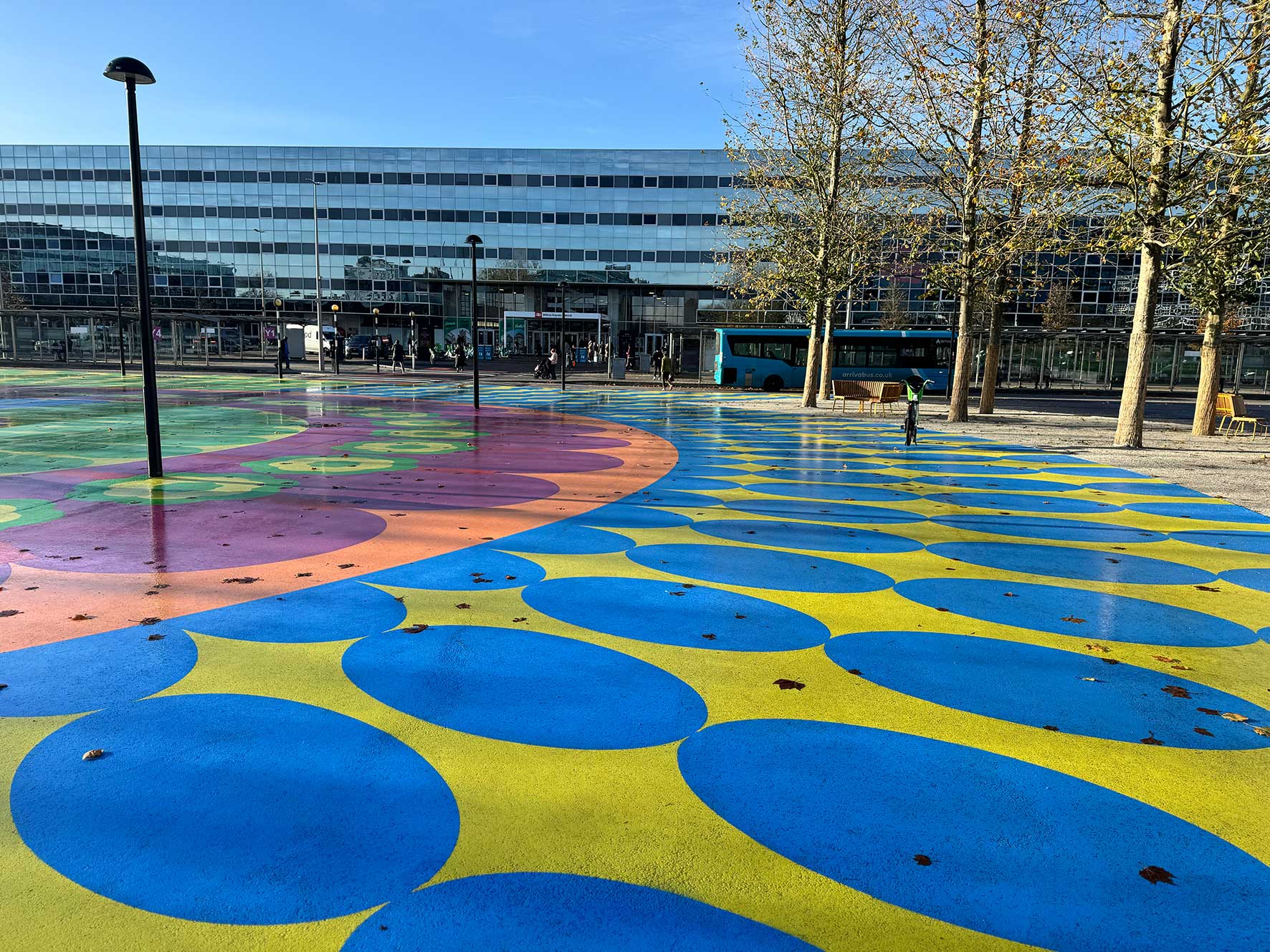
From international festivals and live music to public art and cutting-edge technology, Milton Keynes has plenty to celebrate. Now the city is one step closer to sharing its story with the rest of the country.
Milton Keynes is officially in the running to become UK City of Culture 2029, having secured a place on the final shortlist alongside Sheffield, Blackpool and Wrexham.
It’s an exciting milestone for a city that has never been afraid to do things differently, and one that is often better known for its roundabouts and concrete cows than the extraordinary range of creativity happening within its boundaries.
But anyone who has enjoyed a summer evening at The National Bowl, discovered an unexpected piece of public art or experienced the spectacle of the Milton Keynes International Festival will know there is much more to the city than its familiar landmarks.
Now there is a chance to show the rest of the country.
The successful city will receive £10 million to help deliver a year-long programme of cultural celebrations in 2029, bringing the possibility of new performances, exhibitions, events and creative opportunities for residents and visitors alike.
For Milton Keynes, the bid is about more than a calendar of cultural events. It is an opportunity to tell the story of a place shaped by people from different backgrounds, where innovation, imagination and community have long been part of everyday life.
From the music and atmosphere of Reggae Land to the Midsummer Festival in the city centre, the campaign has already been visible at events across Milton Keynes.
The city’s creative credentials extend well beyond its major venues. The International Festival has brought extraordinary performances to familiar public spaces, while projects such as City of Codes and Lights have explored the meeting point between art, technology and the built environment.
That combination of creativity and innovation is a recurring theme in the bid. Milton Keynes has a strong science and technology community, and events such as Milton Keynes Tech Week demonstrate how new ideas can emerge when different industries come together.
But perhaps the most important part of the campaign is the role played by local people.
Residents, artists, community groups, charities and businesses have all been invited to contribute ideas through workshops, events and the city’s Book of Ideas. Their contributions have helped shape a bid intended to reflect the many different communities that call Milton Keynes home.
Local poet Maureen Onwunali has also lent her voice to the campaign through Ode to Milton Keynes, a creative celebration of the city.
Milton Keynes Central MP Emily Darlington welcomed the news.
“This bid is about hope in every postcode in our city and showing everyone who lives here that opportunity is on their doorstep.
“Milton Keynes is a city that has been built by all those who have made it their home: started local businesses, created community groups, begun a family here. I can’t wait to show the rest of the country what a fantastic city Milton Keynes is – and that we’re about more than concrete cows and roundabouts.”
Callum Anderson, MP for Buckingham and Bletchley, said reaching the shortlist was recognition of the city’s progress and its potential.
“To see Milton Keynes make the final shortlist for UK City of Culture is a fantastic achievement and a powerful recognition of how far our city has come.”
He also pointed to the opportunities created by East West Rail and the wider Oxford-Cambridge Growth Corridor, and the potential for a successful bid to bring investment and renewed pride to communities including Bletchley.
For Milton Keynes North MP Chris Curtis, the announcement was also an opportunity to remember Shanika Mahendran, whose enthusiasm for the city helped inspire the campaign.
“It is also a moment of remembrance for our fantastic friend and colleague, Shanika Mahendran, whose passion and love for the city that she called home led us to fight for this title. I’m so proud that we’ve made it this far for her and everyone else in this city who saw the opportunity in this bid.”
Reaching the final four also brings the prospect of further funding to support elements of the city’s cultural ambitions, regardless of the eventual outcome.
The next stage will see the shortlisted locations undergo further assessment before the winning city is announced, expected by January 2027.
There is still competition to overcome, and Sheffield, Blackpool and Wrexham will each have their own stories to tell.
But for Milton Keynes, reaching this stage is already an opportunity to celebrate a city whose cultural life stretches far beyond its best-known landmarks.
And perhaps, come 2029, the rest of the country will get to discover it too.